




Imagine being locked away in a small, dark room for 25 years, without fresh air, sunlight, or any human interaction. This haunting scenario was the reality for Blanche Monnier, a woman whose story is as tragic as it is shocking. This story shows us the depths of human cruelty and how the human spirit can survive such atrocities.
Her story highlights the dark side of familial control and its severe consequences.
The Early Years
Blanche Monnier, affectionately known as “La Séquestrée de Poitiers,” was born in 1849 to an aristocratic family in Poitiers, France. She was a young woman known for her beauty and grace, beloved by many and courted by numerous suitors. Blanche’s life seemed to be one of promise and potential. She was known for her cheerful disposition and was a socialite in the local community. However, her fate took a dark turn when she fell in love with an older lawyer, a match her mother, Louise Monnier, vehemently disapproved of. She deemed him unsuitable and “penniless”
The Disappearance
In 1874, at the age of 25, Blanche mysteriously disappeared. Her family claimed she had gone missing, and despite extensive searches, she was never found. The community mourned her loss, assuming she had met a tragic end. Friends and neighbors were baffled, as Blanche had always been a visible and lively member of society. Little did they know that Blanche was much closer than anyone could have imagined, hidden away in her own home void of any human contact from the outside world.
A Shocking Discovery and 25 Years of Unspeakable Horrors
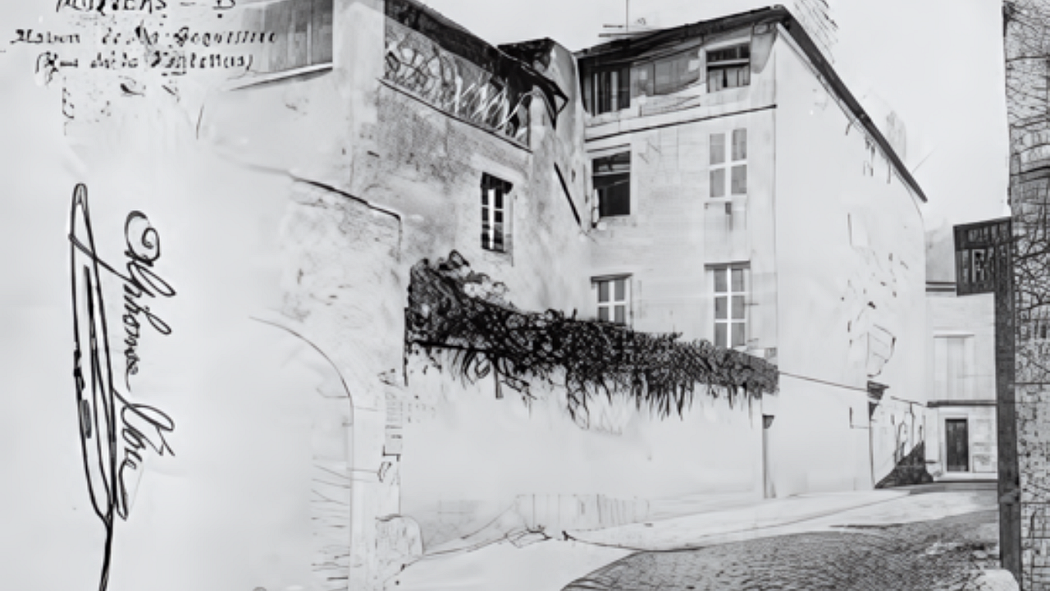
It wasn’t until May 23, 1901, that the horrifying truth came to light. Acting on an anonymous tip, which was a letter sent to the Paris Attorney General, police officers arrived at the Monnier residence. The tip had suggested that a woman was being held captive in deplorable conditions. Initially skeptical, the officers hesitated but ultimately decided to investigate this claim.
“Monsieur Attorney General: I have the honor to inform you of an exceptionally serious occurrence. I speak of a spinster who is locked up in Madame Monnier’s house, half-starved and living on a putrid litter for the past twenty-five years — in a word, in her own filth.”
As they entered the house, a foul stench led them to a locked, windowless room. They forced the door open and were met with an appalling sight. Blanche Monnier, now 50 years old, was lying in a filthy, straw-filled bed. She was emaciated, weighing just 55 pounds, and surrounded by waste and vermin. The room had not been cleaned in years, and Blanche had not seen sunlight or felt fresh air in a quarter of a century. The filth and squalor of the room were unimaginable, and Blanche herself was covered in sores and severely malnourished.
The once vibrant socialite was reduced to a skeletal unkempt figure, her beauty stripped away by the cruelties inflicted upon her.

The Imprisonment: A Life of Privilege Turned Into a Life of Torment
Blanche’s mother, Louise Monnier, and her brother, Marcel, were immediately arrested. The truth of Blanche’s confinement was revealed during their interrogation. Louise, a domineering and controlling woman, had imprisoned her daughter to prevent her from marrying the lawyer she disapproved of. Louise’s obsession with maintaining control over Blanche’s life led her to commit this unthinkable act. Over the years, Marcel had become complicit, either out of fear of his mother or a twisted sense of duty, ensuring that Blanche remained hidden from the world.
Blanche had endured unimaginable suffering, sustained only by the meager food her mother provided and her will to live. Despite her circumstances, Blanche’s determination to survive was extraordinary. She later recounted that she found solace in her memories and the hope that one day she would be free. This hope, although dim, was her lifeline.

The Aftermath
Louise Monnier died 15 days after her arrest, likely from the shock and stress of the exposure of her crime. Marcel faced trial but was eventually acquitted due to being deemed mentally incapacitated. He spent the rest of his life in a psychiatric institution. His defense claimed that he had been manipulated and controlled by his mother, just as Blanche had been.
Blanche, on the other hand, was taken to a hospital where she received care and nourishment. Although she never fully recovered from her ordeal, she did regain some strength and even a semblance of normalcy. Tragically due to her ordeal, she continued to suffer from, anorexia and schizophrenia. She lived the remainder of her life in a French sanitarium, passing away in 1913 at the age of 64. Blanche’s health had been irreparably damaged, and her life was very much scarred, however, she did find some peace in her final years, away from the oppressive environment that had defined much of her life.
Reflections on a Tragedy
The story of Blanche Monnier’s story is a sad reminder of the dangers of societal norms and the lengths some will go to maintain appearances. Her family’s actions, driven by a desire to preserve their reputation, robbed Blanche of her humanity and nearly three decades of her life.
This story reminds us of the depths of human cruelty and how people can survive such atrocities.
Blanche’s tragic tale has been told throughout history, leaving a mark on all who hear it. It prompts us to reflect on the importance of compassion, the need to protect the vulnerable, and the strength that can be found even in the darkest of times. Her story also underscores the dark side of familial control and the severe consequences it can have on the lives of those subjected to it.






No Comments